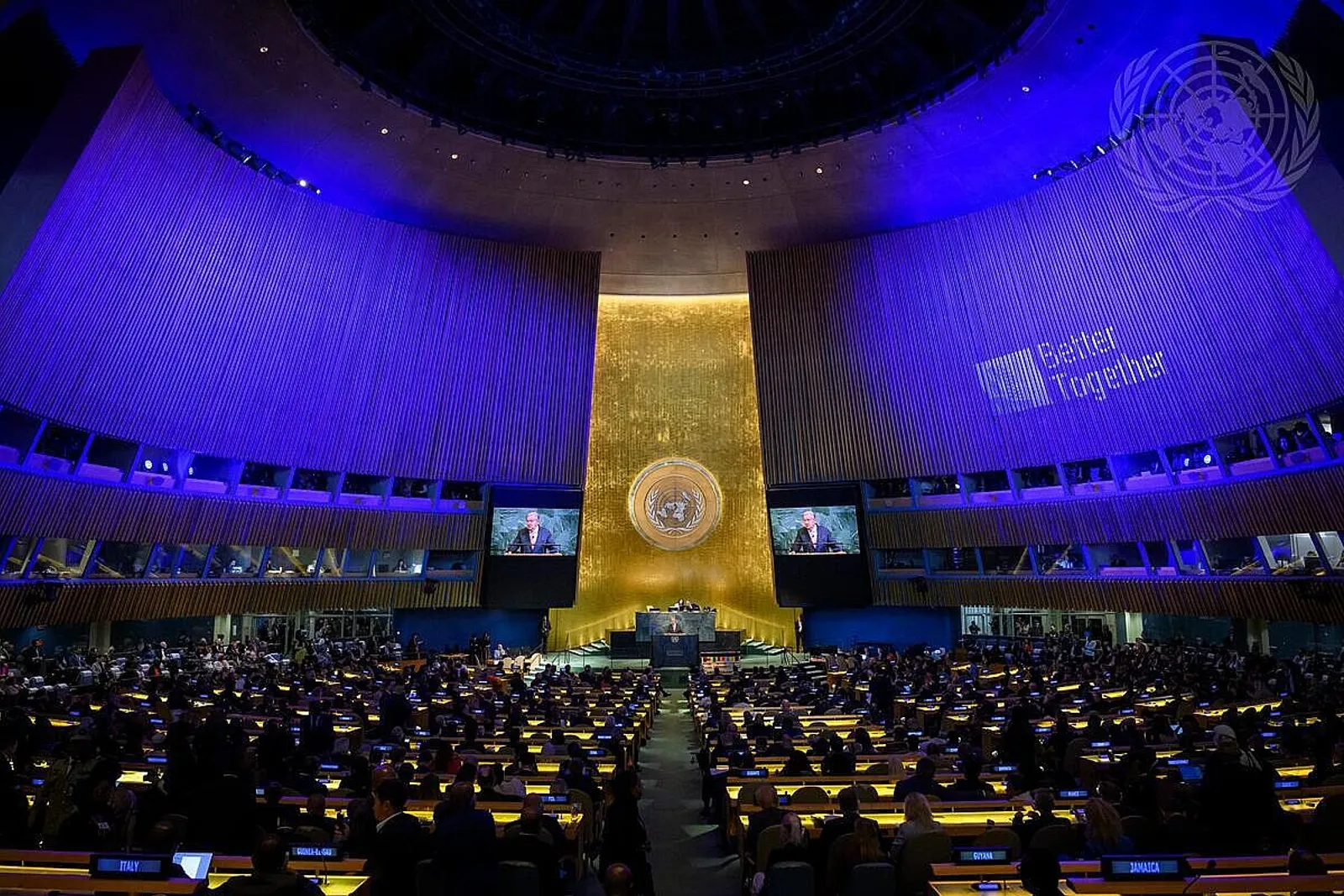
FEIM en el 80 aniversario de la Asamblea General de Naciones Unidas (21 al 26 de septiembre)

Evento paralelo: “At Risk and Underfunded: The Impact of Global Funding Cuts on Women’s Rights Organizations Working to End Violence Against Women and Girls”
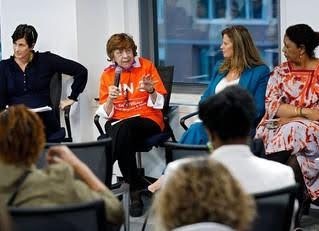
El 21 de septiembre de 2025, en el marco del 80º período de sesiones de la Asamblea General de la ONU (UNGA80), se llevó a cabo el evento paralelo “At Risk and Underfunded: The Impact of Global Funding Cuts on Women’s Rights Organizations Working to End Violence Against Women and Girls”, en la sede de ONU Mujeres en Nueva York.

La actividad, organizada en el marco del programa ACT to End Violence Against Women de ONU Mujeres y con el apoyo de la Unión Europea, buscó visibilizar cómo los recortes en la financiación mundial afectan directamente a las organizaciones de mujeres que trabajan para prevenir y responder a la violencia contra mujeres y niñas.
A pesar de décadas de avances, las organizaciones feministas enfrentan una crisis sin precedentes: menos del 1% de la asistencia oficial para la igualdad de género llega a estas organizaciones de manera directa, y gran parte de los fondos disponibles son a corto plazo y con restricciones. Esta situación, sumada al retroceso de derechos, la reducción de espacios cívicos y la inestabilidad económica global, ha obligado a muchas organizaciones a reducir servicios esenciales, despedir personal o incluso cerrar.
El panel central del evento, moderado por la Dra. Kemi DaSilva-Ibru (fundadora de Women at Risk International Foundation – WARIF), reunió a referentes como Hala Alkarib (SIHA Network), la Dra. Mabel Bianco (miembro del Comité Directivo de la Sociedad Civil del programa ACT), y Abigail Erikson (UN Trust Fund to End Violence against Women). Las panelistas compartieron experiencias y evidencias sobre el impacto de los recortes, resaltando la importancia de garantizar financiamiento flexible, de largo plazo y liderado por feministas para sostener los servicios esenciales, fortalecer la incidencia y avanzar hacia la eliminación de la violencia de género.
Durante el evento también se presentaron los hallazgos de la encuesta global 2025 de ONU Mujeres sobre el impacto de los recortes de financiamiento, junto con evidencia del UN Trust Fund to End Violence against Women. El objetivo fue reafirmar la urgencia de financiamiento sostenible para los movimientos feministas, reconociéndolos como actores estratégicos en la eliminación de la violencia de género y en el cumplimiento de la Agenda 2030.
Se espera que este encuentro contribuya a generar mayor conciencia política y compromiso internacional para fortalecer los mecanismos de financiamiento y priorizar la inversión en organizaciones de mujeres como socias esenciales en la construcción de sociedades más justas e igualitarias.
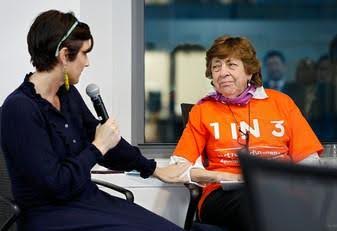
Avances y Desafíos en América Latina y el Caribe a 30 años de la Plataforma de Acción de Beijing
El pasado 23 de septiembre de 2025, de 09:00 a 10:30 (hora de Nueva York), se llevó a cabo en formato online el evento“Avances y Desafíos enAmérica Latinayel Caribea 30 años de la Plataforma de Acción de Beijing”, organizado por el Comité de ONGs sobre la Condición de la Mujer de América Latina y el Caribe (NGO CSW LAC) y la Fundación para Estudio e Investigación de la Mujer (FEIM).
La actividad recordó que la Plataforma de Acción de Beijing, adoptada en 1995, marcó un hito fundamental para la igualdad de género yel empoderamiento de las mujeresy niñas.A tres décadas de su aprobación, aún persisten brechas significativas en la región: los avances no se dieron de manera uniforme y muchas desigualdades continúan limitando los derechos de las mujeres y niñas en toda su diversidad.
Durante el encuentro, que fue abierto por Mabel Bianco en su rol de co- presidenta del NGO CSW LAC, se presentaron diversas ponencias de redes regionales. María Lucila Esquivel (RedTraSex) expuso sobrelasituación de las trabajadoras sexuales; Marcela Romero (RedlacTrans) presentó la perspectiva delacomunidad LGBTQ+;VerónicaGonzález (REDI) abordó los derechos de las mujeres con discapacidad; Terry Ince (CEDAW Committee of T&T) se refirió a los derechos de las mujeres y niñas del Caribe inglés;y Cecilia Mena (CoaliciónNacional de Mujeres del Ecuador)
describió la situación en su país. Posteriormente, intervinieron representantes gubernamentales como Mónica Xavier, Directora del Instituto Nacional de las Mujeres de Uruguay (MIDES), y Priscilla Carrasco Pizarro, Directora Nacional del SERNAMEG (Chile), quienes compartieron las experiencias y desafíos en sus respectivos países. Finalmente, se realizó un intercambio con el público y el cierre estuvo a cargo de Mabel Bianco, quien también moderó el diálogo. El encuentro
permitió reafirmarlaimportancia de Beijing+30 como oportunidad para renovar compromisos y fortalecer alianzas en pos de laigualdad de género enAmérica Latina y el Caribe.
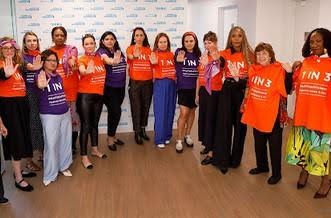
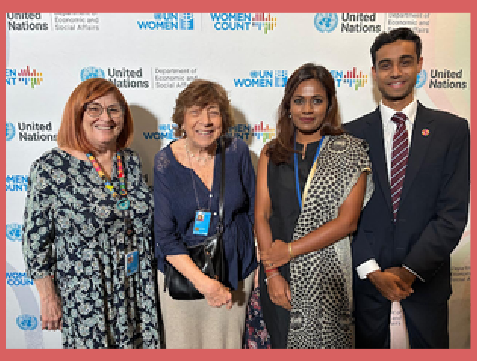 Presentación del documento de onu mujeres “Snapshot de género”. Feim, representada por Mabel Bianco y Betty Levy asistieron a la presentación y compartieron con distintas colegas y funcionarios. En la foto se encuentrar con Shamala de Arrow Asia Pacífico e Ishaan vocero del grupo mayor de mujeres.
Lanzamiento del recurso “10 Ways to Engage Men & Boys to Counter Backlash” en UNGA80
El 23 de septiembre de 2025, en el marco del 80º período de sesiones de la Asamblea General de Naciones Unidas (UNGA80), se llevó a cabo en Nueva York el lanzamiento de la guía “10 Ways to Engage Men & Boys to Counter Backlash”. El evento tuvo lugar en la sede de la Comunidad Internacional Bahá’í y reunió a representantes de gobiernos, organismos internacionales, donantes y activistas feministas de diversas regiones.
La iniciativa, impulsada por la colectiva Men, Masculinities and Countering Backlash, busca ofrecer estrategias concretas para enfrentar los retrocesos en materia de igualdad de género y derechos humanos, poniendo el foco en la necesidad de involucrar a los hombres y niños como aliados en esta tarea.
El encuentro incluyó la presentación de la hoja informativa y un panel de discusión con referentes internacionales como Alexander De Croo, ex primer ministro de Bélgica; Alex DiBranco, directora del Institute for Research on Male Supremacism; Alan Greig, consultor en masculinidades; y Nayana Chowdhury, directora ejecutiva de Breakthrough.
Entre las panelistas estuvo Mabel Bianco, presidenta de FEIM e integrante de la colectiva organizadora, quien en su intervención final compartió un análisis sobre la situación en América Latina y el Caribe. Bianco advirtió sobre los retrocesos en la región y destacó la importancia de sumar a los hombres como parte de la solución para resistir y avanzar hacia sociedades más igualitarias.
Liderazgo Feminista: Reclamando Espacio, Forjando Futuros; 80 Años de Resistencia, 30 Desde Pekín”
El 23 de septiembre se realizó en Nueva York la mesa redonda “Liderazgo Feminista: Reclamando Espacio, Forjando Futuros; 80 Años de Resistencia, 30 Desde Pekín”, organizada en el Centro
Debs dela UniversidadAmericana de Beirut (305 E 47th St, Nueva York,NY10017).
El encuentro reunió a referentes como Memory Kachambwa (FEMNET), Ishaan Shah (Women’s Major Group), Aruna Rao (Oxfam International y cofundadora de Gender at Work) y Mona
Eltahawy(autorafeministayescritora deThe FEMINIST GIANT Newsletter),con lamoderación deAminaHersi, jefa deDerechos de Género y Justicia en Oxfam International.
La presidenta de FEIM, Mabel Bianco, también participó de esta importante instancia de reflexión y debate sobre los desafíos del liderazgo feminista, en el marco de los 30 años de la Plataforma de
Acción de Beijing y ocho décadas de resistencia de los movimientos de mujeres y feministas en todo el mundo.
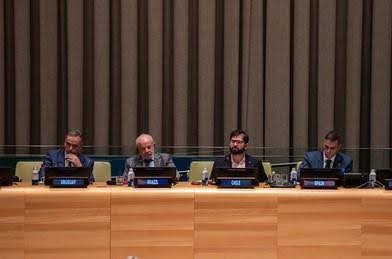 El 24 de septiembre FEIM participó en lareunión dealto nivel “En defensa de la democracia, combatiendo el extremismo”, convocada por el presidente de Chile, Gabriel Boric, en
seguimiento a las iniciativas impulsadas previamente por Luiz Inácio Lula da Silvay Pedro Sánchez.
Durante el encuentro, realizado en la sede de las Naciones Unidas, el presidente Boricanunció oficialmente lacandidatura de la ex presidenta Michelle Bachelet a la Secretaría General de la
ONU, un hecho histórico que representa un paso significativo para Chile y toda América Latina.
Declaración conjunta de ACT para la Asamblea General de las Naciones Unidas 80:
El Comité Directivo de la Sociedad Civil de ACT Global ha emitido una declaración conjunta previa al 80.º período de sesiones de la Asamblea General de las Naciones Unidas (AGNU80), en la que enfatiza la necesidad de inversiones audaces y transformadoras para erradicar la violencia contra las mujeres y las niñas (VCMN).
En síntesis, la declaración exige:
-
La adopción de un enfoque de gobierno integral para poner fin a la violencia contra las mujeres, mediante la implementación de planes de acción nacionales plenamente presupuestados, basados en evidencia, y con enfoques multisectoriales e intersectoriales.
-
Financiación sostenida y aumentada para erradicar la violencia contra las mujeres y las niñas a través de la asistencia oficial para el desarrollo, a fin de garantizar la continuidad de los servicios que salvan vidas y de las intervenciones de prevención.
-
Aumento de las inversiones directas en financiación sostenida, a largo plazo y flexible para las organizaciones de derechos de las mujeres y los movimientos feministas, incluidos aquellos que trabajan en contextos de crisis, conflicto y posconflicto.
-
La adopción, implementación, cumplimiento y financiación de leyes y políticas integrales y basadas en evidencia para poner fin a la violencia contra las mujeres y las niñas, en consonancia con estándares globales como la Plataforma de Acción de Beijing.
-
Mayor inversión en evidencia, investigación y desarrollo en terreno para fortalecer los enfoques basados en evidencia y garantizar que la prevención y la respuesta a la VCMN sean sostenibles y escalables.
FEIM at the 80th Session of the United Nations General Assembly (21–26 September)
On 21 September 2025, within the framework of the 80th Session of the United Nations General Assembly (UNGA80), the side event “At Risk and Underfunded: The Impact of Global Funding Cuts on Women’s Rights Organizations Working to End Violence Against Women and Girls” was held at the UN Women offices in New York.
The event, organized as part of UN Women’s ACT to End Violence Against Women programme and supported by the European Union, sought to highlight how global funding cuts directly affect women’s organizations working to prevent and respond to violence against women and girls.
Despite decades of progress, feminist organizations are facing an unprecedented crisis: less than 1% of official development assistance for gender equality directly reaches these organizations, and much of the available funding is short-term and restricted.
This situation—combined with the rollback of rights, shrinking civic space, and global economic instability—has forced many organizations to reduce essential services, lay off staff, or even close down.
Side event: “At Risk and Underfunded: The Impact of Global Funding Cuts on Women’s Rights Organizations Working to End Violence Against Women and Girls”
The main panel, moderated by Dr. Kemi DaSilva-Ibru (founder of Women at Risk International Foundation – WARIF), brought together leaders such as Hala Alkarib (SIHA Network), Dr. Mabel Bianco (member of the ACT Civil Society Steering Committee), and Abigail Erikson (UN Trust Fund to End Violence against Women).
The speakers shared experiences and evidence on the impact of funding cuts and emphasized the importance of ensuring flexible, long-term, feminist-led funding to sustain essential services, strengthen advocacy, and advance the elimination of gender-based violence.
During the event, UN Women’s 2025 global survey findings on the impact of funding cuts were presented, along with evidence from the UN Trust Fund to End Violence against Women. The discussion reaffirmed the urgent need for sustainable funding for feminist movements, recognizing them as strategic actors in achieving the eradication of gender-based violence and the 2030 Agenda.
The meeting aimed to promote greater political awareness and international commitment to strengthen financing mechanisms and prioritize investment in women’s organizations as key partners in building more just and equal societies.
Progress and Challenges in Latin America and the Caribbean 30 Years After the Beijing Platform for Action
On 23 September 2025, from 09:00 to 10:30 (New York time), the virtual event “Progress and Challenges in Latin America and the Caribbean 30 Years After the Beijing Platform for Action” took place, organized by the NGO Committee on the Status of Women in Latin America and the Caribbean (NGO CSW LAC) and the Foundation for the Study and Research of Women (FEIM).
The meeting recalled that the Beijing Platform for Action, adopted in 1995, marked a turning point for gender equality and the empowerment of women and girls. Thirty years later, major gaps persist in the region: progress has been uneven, and inequalities continue to restrict the rights of women and girls in all their diversity.
The session opened with remarks by Mabel Bianco, co-chair of NGO CSW LAC, and included presentations from regional networks. María Lucila Esquivel (RedTraSex) spoke about the situation of sex workers; Marcela Romero (RedlacTrans) presented the perspective of the LGBTQ+ community; Verónica González (REDI) addressed the rights of women with disabilities; Terry Ince (CEDAW Committee of Trinidad and Tobago) discussed the rights of women and girls in the English-speaking Caribbean; and Cecilia Mena (National Women’s Coalition of Ecuador) described the national context.
Government representatives also participated, including Mónica Xavier, Director of the National Institute for Women of Uruguay (MIDES), and Priscilla Carrasco Pizarro, National Director of SERNAMEG (Chile), who shared experiences and challenges in their countries.
The meeting concluded with an open dialogue moderated by Mabel Bianco, who emphasized that Beijing +30 represents an opportunity to renew commitments and strengthen alliances in favor of gender equality in Latin America and the Caribbean.
Presentation of UN Women’s “Gender Snapshot” Report
FEIM, represented by Mabel Bianco and Betty Levy, participated in the presentation of UN Women’s “Gender Snapshot” report and held meetings with colleagues and officials.
Launch of the resource “10 Ways to Engage Men & Boys to Counter Backlash” at UNGA80
On 23 September 2025, within the framework of UNGA80, the guide “10 Ways to Engage Men & Boys to Counter Backlash” was launched in New York at the Bahá’í International Community offices.
The event gathered representatives from governments, international organizations, donors, and feminist activists from different regions.
The initiative, led by the collective Men, Masculinities and Countering Backlash, aims to provide concrete strategies to confront backlash against gender equality and human rights, emphasizing the need to engage men and boys as allies in this work.
The discussion featured Alexander De Croo, former Prime Minister of Belgium; Alex DiBranco, Director of the Institute for Research on Male Supremacism; Alan Greig, consultant on masculinities; and Nayana Chowdhury, Executive Director of Breakthrough.
Among the panelists was Mabel Bianco, President of FEIM and member of the organizing collective, who provided an analysis of the situation in Latin America and the Caribbean. She warned about current setbacks in the region and underscored the importance of including men as part of the solution to resist regression and move toward more equitable societies.
Feminist Leadership: Reclaiming Space, Forging Futures – 80 Years of Resistance, 30 Since Beijing
On 23 September, the roundtable “Feminist Leadership: Reclaiming Space, Forging Futures – 80 Years of Resistance, 30 Since Beijing” was held in New York at the Debs Center of the American University of Beirut.
The discussion brought together figures such as Memory Kachambwa (FEMNET), Ishaan Shah (Women’s Major Group), Aruna Rao (Oxfam International and co-founder of Gender at Work), and Mona Eltahawy (feminist writer and author of The FEMINIST GIANT Newsletter), moderated by Amina Hersi, Head of Gender Rights and Justice at Oxfam International.
FEIM President Mabel Bianco participated in this important space for reflection and debate on the challenges of feminist leadership, within the framework of 30 years of the Beijing Platform for Action and eight decades of women’s and feminist movements worldwide.
High-level meeting: “In Defence of Democracy, Combating Extremism”
On 24 September, FEIM took part in the high-level meeting “In Defence of Democracy, Combating Extremism”, convened by Chilean President Gabriel Boric, following earlier initiatives by Luiz Inácio Lula da Silva and Pedro Sánchez.
During the session at UN Headquarters, President Boric officially announced the candidacy of former president Michelle Bachelet for UN Secretary-General — a historic event that marks a significant step for Chile and the entire Latin American region.
ACT Joint Statement for the 80th Session of the United Nations General Assembly
The ACT Global Civil Society Steering Committee issued a joint statement ahead of UNGA80, emphasizing the need for bold and transformative investments to eradicate violence against women and girls.
The statement called for:
-
A comprehensive, government-wide approach to end violence against women through fully funded, evidence-based, multisectoral national action plans.
-
Sustained and increased financing through official development assistance to ensure continuity of lifesaving services and prevention programs.
-
Direct, long-term, and flexible funding for women’s rights organizations and feminist movements, including those working in crisis, conflict, and post-conflict settings.
-
Adoption, implementation, and financing of comprehensive, evidence-based laws and policies aligned with global standards such as the Beijing Platform for Action.
-
Increased investment in research and data to strengthen evidence-based approaches and ensure sustainable, scalable prevention and response to gender-based violence.