
El NGO CSW LAC en CEPAL
El 1 y 2 de diciembre tuvo lugar la 67a Reunión de la Mesa Directiva de la Conferencia
Regional sobre las Mujeres de América Latina y el Caribe, realizada en modalidad híbrida
desde la sede de CEPAL en Santiago de Chile. Durante el encuentro, las delegaciones
intercambiaron ideas sobre las acciones previstas para implementar el Compromiso de
Tlatelolco, conocieron el informe 2025 de la Secretaría de la Conferencia Regional sobre la
Mujer y participaron en una sesión informativa sobre el proyecto de recomendación general
N.o 41 del Comité CEDAW, referido a los estereotipos de género. Asimismo, se llevó a cabo la
sesión especial de consulta regional previa al 70o período de sesiones de la CSW. NGO
CSW LAC estuvo presente, acompañando el debate y las prioridades regionales.
El 30 de noviembre se realizó el Foro Regional Preparatorio de la CSW, organizado por
el NGO CSW LAC. En ese espacio se presentó el documento de trabajo, tras su análisis y
discusión en cuatro grupos de trabajo —dos presenciales y dos virtuales— A partir del
mismo se elaboró el texto consensuado de la Declaración del Comité de Organizaciones
No Gubernamentales sobre la Condición Jurídica y Social de la Mujer de América
Latina y el Caribe, presentada oficialmente el 2 de diciembre, en el marco de la Reunión
Regional Preparatoria de la CSW70. Previamente se realizó una mesa redonda en la que
hablaron representantes de algunos gobiernos; por parte de la sociedad civil participó Paola
Yañez Inofuentes, coordinadora de la Red Regional de Mujeres Afrodescendientes y de la
diáspora.
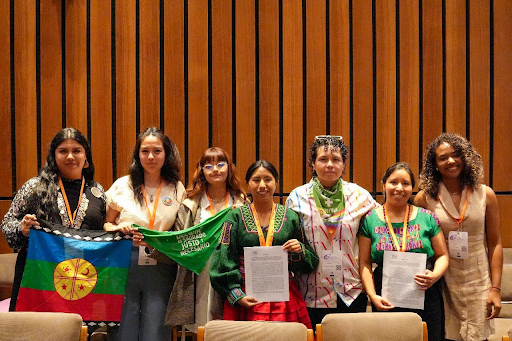
La lectura de la Declaración contó con la participación de jóvenes de las redes
participantes.En sus intervenciones, Tatiana Pino Pájaro (Colombia) destacó que “para
las mujeres afrodescendientes del Caribe el acceso a la justicia no es solo un derecho, es
un espacio donde se disputa la vida y la dignidad. Es urgente que los Estados garanticen
sistemas de justicia interseccionales y antirracistas”. Por su parte, Jham Medrano Cayalo
(Bolivia) advirtió que “la laicidad de los Estados se ha debilitado ante el avance de los
fundamentalismos religiosos, que influyen en decisiones judiciales y restringen los derechos
y la participación de las mujeres en los espacios públicos”. A su vez, Trinidad Herrera
(Colombia) señaló que “no hay acceso real a la justicia sin justicia reproductiva. La
criminalización y las restricciones al aborto siguen siendo una forma directa de injusticia”.
Finalmente, Camila Belén Guichacoy (Argentina) subrayó que “la sobrecarga histórica de
los cuidados es invisibilizada y recae sobre mujeres y niñas, limitando su tiempo y
autonomía. La ausencia de sistemas integrales de cuidados reproduce desigualdades y
profundiza la injusticia”, mientras que Gisela Inquilla visibilizó la situación de las mujeres y
jóvenes indígenas al afirmar: “somos víctimas y/o sobrevivientes de violencias, unidas y
casadas a temprana edad. Además, se nos niega el acceso a empleos dignos y seguros”.
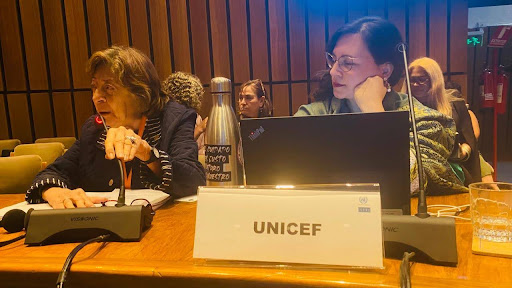
En ese espacio, también intervino Mabel Bianco para plantear la situación del acceso a la
justicia y, en términos generales, el contexto de la igualdad de género en Argentina,
exponiendo los cambios y retrocesos recientes y presentando una declaración elaborada por
feministas argentinas, con el objetivo de que esta realidad sea conocida a nivel regional e internacional.
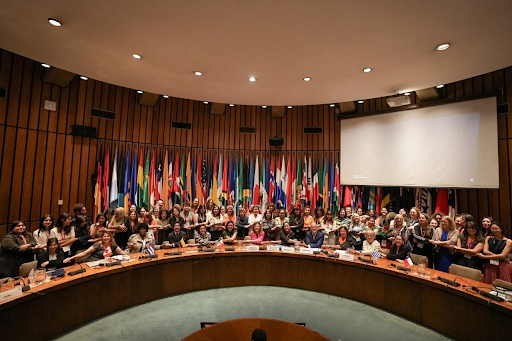
La 67a Reunión de la Mesa Directiva de la Conferencia Regional sobre las Mujeres de
América Latina y el Caribe reafirmó los compromisos históricos de los Estados con la Agenda
Regional de Género, el Compromiso de Tlatelolco y la Plataforma de Acción de Beijing,
poniendo especial énfasis en garantizar y fortalecer el acceso a la justicia para todas las
mujeres y las niñas. En los acuerdos se destaca el trabajo de la organización conjunta de la
sesión especial de consulta regional previa al 70o período de sesiones de la Comisión de la
Condición Jurídica y Social de la Mujer, en el marco de esta 67a Reunión de la Mesa Directiva de
la Conferencia Regional, en particular en relación con el acceso a la justicia para mujeres y niñas.
Además destacan la urgencia de eliminar barreras legales e institucionales, combatir todas las
formas de violencia y discriminación —incluidas las digitales y las prácticas nocivas como los
matrimonios infantiles—, avanzar en la igualdad sustantiva, la democracia paritaria y el
reconocimiento del derecho al cuidado, así como fortalecer el multilateralismo frente al
desfinanciamiento.
 Diciembre 2025
The NGO CSW LAC at ECLAC
On December 1 and 2, the 67th Meeting of the Presiding Officers of the Regional Conference
on Women in Latin America and the Caribbean was held in a hybrid format at ECLAC
headquarters in Santiago, Chile. During the meeting, delegations exchanged ideas on the
actions planned to implement the Tlatelolco Commitment, reviewed the 2025 report of the
Secretariat of the Regional Conference on Women, and participated in an information session
on the CEDAW Committee’s draft general recommendation No. 41 on gender stereotypes. A
special regional consultation session was also held prior to the 70th session of the CSW.
NGO CSW LAC was present, accompanying the debate and regional priorities.
On November 30, the CSW Regional Preparatory Forum was held, organized by NGO
CSW LAC. The document was presented at this forum, following analysis and discussion in
four working groups—two in person and two virtual. Based on this, the text of the
Declaration of the Committee of Non-Governmental Organizations on the Legal and
Social Status of Women in Latin America and the Caribbean was drafted and officially
presented on December 2, within the framework of the Regional Preparatory Meeting for
CSW70. Prior to this, a round table was held in which representatives of some governments
spoke; Paola Yañez Inofuentes, coordinator of the Network of Afro-Latin American,
Afro-Caribbean and Diaspora Women, participated on behalf of civil society.
Young Women from the networks members of the NGO CSW LAC took part in reading
the Declaration. In her remarks, Tatiana Pino Pájaro (Colombia) emphasized that “for
Afro-descendant women in the Caribbean, access to justice is not only a right, it is a space
where life and dignity are contested. It is urgent that States guarantee intersectional and
anti-racist justice systems.” For her part, Jham Medrano Cayalo (Bolivia) warned that “the
secular nature of States has been weakened by the advance of religious fundamentalisms,
which influence judicial decisions and restrict women’s rights and participation in public
spaces.” In turn, Trinidad Herrera (Colombia) pointed out that «there is no real access to
justice without reproductive justice. Criminalization and restrictions on abortion continue to
be a direct form of injustice”. Camila Belén Guichacoy (Argentina) emphasized that ”the
historical overload of care is invisible and falls on women and girls, limiting their time and
autonomy. The absence of comprehensive care systems reproduces inequalities and
deepens injustice,“ while Gisela Inquilla highlighted the situation of indigenous women and girls by stating: ”We are victims and/or survivors of violence, united and married at an early age. In addition, we are denied access to decent and secure jobs.»
Mabel Bianco also spoke at the event, addressing the issue of access to justice and, in general
terms, the context of gender equality in Argentina. She outlined recent changes and
setbacks and presented a statement elaborated by Argentine feminists with the aim of raising
awareness of this situation at the regional and international levels.
The 67th Meeting of the Presiding Officers of the Regional Conference on Women in Latin
America and the Caribbean reaffirmed the historic commitments of States to the Regional
Gender Agenda, the Tlatelolco Commitment, and the Beijing Platform for Action, with a
special emphasis on guaranteeing and strengthening access to justice for all women and
girls. The agreements highlight the work of the joint organization of the special regional
consultation session prior to the 70th session of the Commission on the Status of Women, within
the framework of this 67th Meeting of the Presiding Officers of the Regional Conference,
particularly in relation to access to justice for women and girls. They also emphasize the urgent
need to eliminate legal and institutional barriers, combat all forms of violence and discrimination—including digital violence and harmful practices such as child marriage—advance substantive equality, parity in democracy, and recognition of the right to care, and strengthen multilateralism in the face of defunding.